Brooklyn luncheon provides “common language” for survivors

As waiters rushed out orders of hot wonton soup, some of the guests clapped along to the violinist playing upbeat Jewish music, while others were lost in conversations about their children, their daily lives, and the Chinese feast before them. For the 100-some Holocaust survivors gathered at Brooklyn’s Shang Chai restaurant earlier this month for the Jewish Community Council of Canarsie’s survivor appreciation luncheon, the annual gathering was like a family reunion.

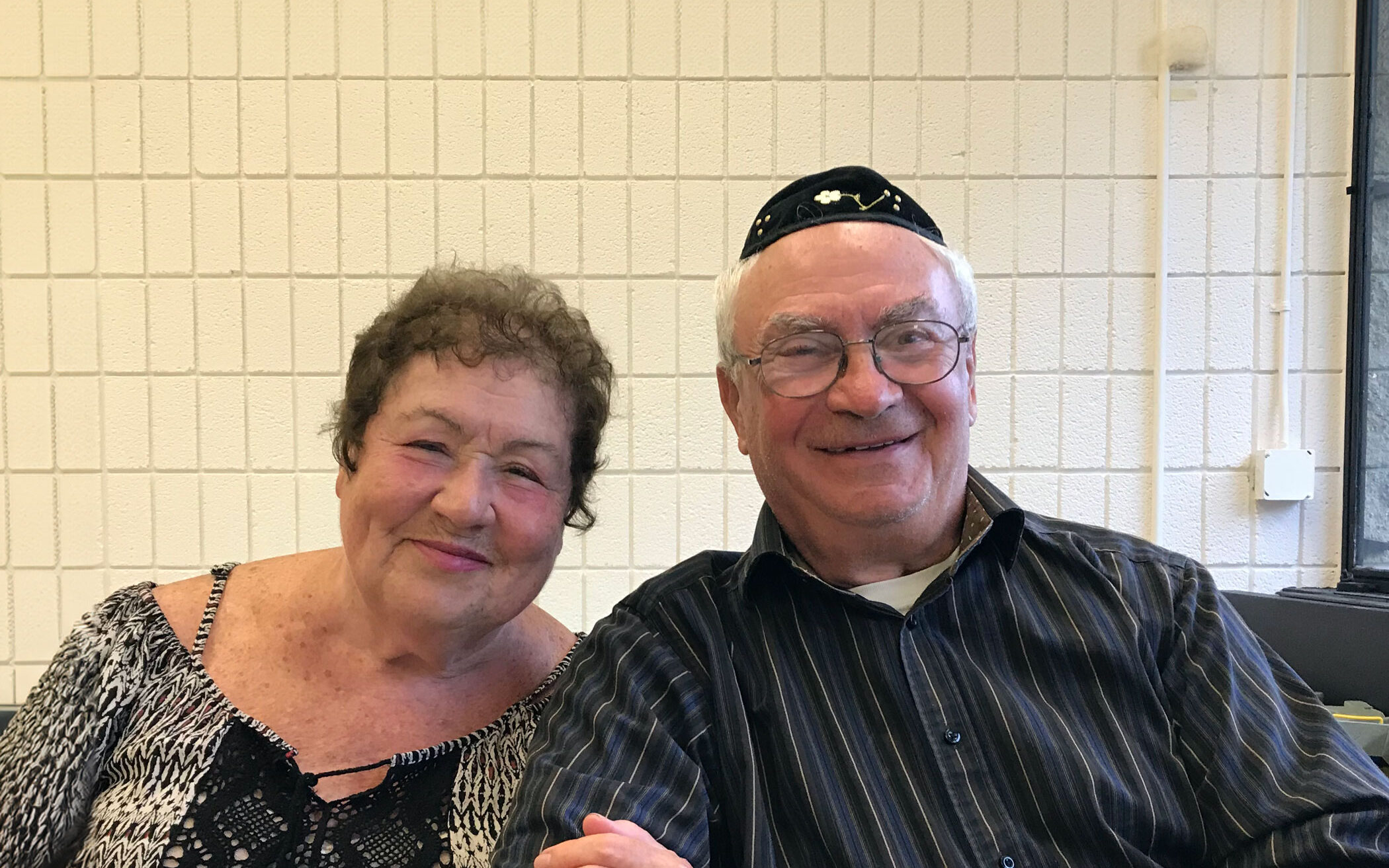
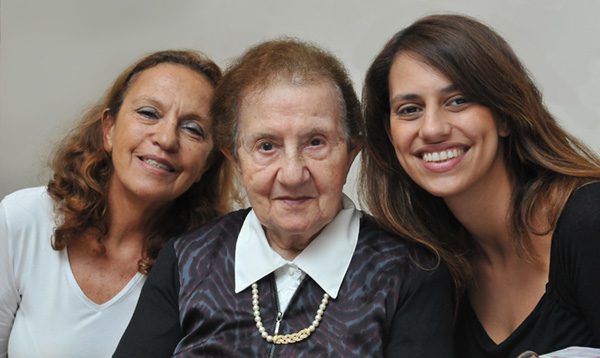
They are like extended family to each other, organizers said of the Nazi victims who came to the JCC of Canarsie's survivor appreciation luncheon.

“A lot of survivors feel the need, at least once a year, to have a common bond with someone else who understands,” said Rabbi Avrohom Hecht, the JCC’s executive director. “They don’t even have to talk about being a survivor.  This is their extended family. They have very small families of their own so this is really their family.”

Only people who went through the Holocaust can really understand what happened, says Nissan Krakinowski, who depends on housekeeping services he receives through the JCC. Originally from Lithuania, Mr. Krakinowski was in his early teens when he lost both his parents and was sent to Dachau. He speaks at local schools about his experiences, and is amazed when young students respond so emotionally to his story. But you cannot really tell people what it is to be afraid, he says, and it is only when he is with other survivors that he feels he is among people who truly understand.

“I have a common language with them,” he says. “They understand me and I understand them. If I was in Dachau and they were in Auschwitz, all of us had the same conditions; all of us had a death sentence.”

The JCC reaches out to some 700 Nazi victims in the Brooklyn area, providing counseling services, support groups, nutrition classes, meals on wheels, and social services. The JCC also provides help to Nazi victims applying for Medicare and Medicaid; aid from local survivor-support agencies, such as Blue Card, which also receives Claims Conference funding; and Claims Conference compensation programs. Claims Conference funding to the JCC helps it provide a number of these services.

Some 100 Nazi victims gathered at Brooklyn's Shang Chai restaurant earlier this month for the JCC of Canarsie's annual survivor appreciation luncheon.

Leonid Barakon came to America in 1979 with his two children. Originally from Odessa, Ukraine, Leonid’s mother was evacuated with her two younger children to Tashkent after the Germans invaded the Soviet Union in 1941, while Leonid’s father was killed while serving in the Soviet army in Leningrad. In 1944, Leonid joined the Soviet army and learned to drive tanks. After the war, he became a cabinet maker, a trade he continued in the United States. Now, he volunteers with the JCC, driving people to the center and also helping with meals on wheels because, he says,  people are in need. “I love this work,” he says.

“We just feel very fortunate that we can help the survivors,” Rabbi Hecht says. “They’re very special people. And we’re really grateful that they built the communities that we’re in 50 years ago when they came here. The synagogues, schools, everything, it’s because of their efforts.”

For more about the JCC of Canarsie’s programs, visit www.canarsiejcc.org.

Share

Honoring the past and guarding the future

While I happily read reports of the growth of the Jewish community in Germany just a few weeks ago, I was dismayed this week to read a JTA report that 66 years after the end of the Holocaust, 20 percent of Germans hold anti-Semitic views.

Twenty percent. That’s two out of every 10 people. That is disturbing to say the least, and evidence of the need for continued education. Despite this, Jewish life is growing in Germany. And it speaks volumes that this study was mandated by the Bundestag, demonstrating the German government’s commitment to combating anti-Semitism.

I am further reassured by a recent move by the Quandt family, which owns German car company BMW. The family has pledged almost $7 million in memory of slave laborers in Nazi Germany. Guenther Quandt joined the Nazi party in 1933 and reportedly took over formerly Jewish-owned factories confiscated by the Nazis, and used Jewish slave labor from concentration camps in his factories. While nothing can repair the damage Guenther Quandt is said to have caused, it is admirable to see his grandson, Stefan Quandt, take responsibility.

Germany is not the only place where anti-Semitism is a concern, however. Even here in New York anti-Semitism remains a problem. The Jewish Week reports that a 40-year-old Queens man has been charged with spray-painting swastikas on a synagogue, a church, and branches of the public library. The New York Police Department reacted swiftly, as did the Queens Jewish Community Council, which rallied last week to bring attention to the vandalism.

Earlier this month, the Park East Synagogue in New York honored 55 Jewish partisans for their efforts in fighting the Nazis. “Even if we saved a few lives and shortened the war, we made a contribution,” 86-year-old Leon Bakst told JTA during the celebration. Mr. Bakst and all of the Jewish Partisans are heroes of the Jewish people, and I congratulate them on this recognition.

What we can learn from all of these stories is the need to remain ever-vigilant against anti-Semitism. While it may seem like these virulent attitudes and deeds continue despite stricter laws and enforcement, we are obligated to continue the fight against anti-Semitism, as the Quandt family and the Queens Jewish community have recently done, and as the Partisans did during the Holocaust. We owe it not only to ourselves and our children to create a better future, but also to the 6 million victims of the Nazis to ensure that their sacrifices were not in vain.

Shabbat shalom.


Share

“Buried Prayers” unearths ghosts of the past

In January 1943, the residents of the Warsaw Ghetto in Poland began their infamous, ill-fated revolt against their Nazi occupiers. Within a few months, the Nazis had crushed the resistance and many survivors of the ghetto were sent to the Majdanek death camp in Lublin. Between April and May of 1943, 15,000 Jews were marched through the streets of Lublin to Majdanek, where thousands of people were temporarily held in the camp’s open fields. The prisoners still had with them small valuables such as rings, watches, necklaces, and coins. Realizing that they were likely marked for death, many of the prisoners buried the few valuables they had with them in an act of defiance to prevent the Nazis from reaping the spoils.

Adam Frydman tells the story of his imprisonment in 1943 at the Majdanek Death Camp near Lublin, Poland. ©2011 Unfinished Business One, LLC

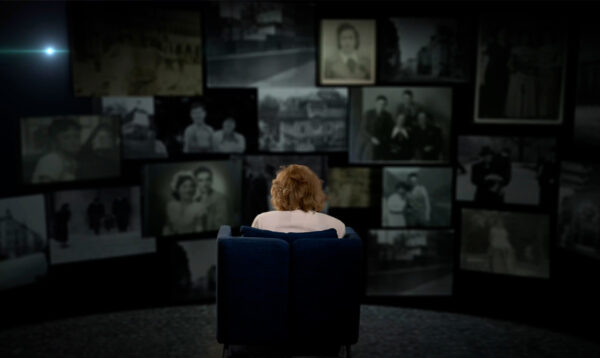
In the documentary film “Buried Prayers,” Adam Frydman, one of the survivors of Majdanek, returns to those fields with an excavation team, determined to recover those lost keepsakes. During a 2005 expedition, an international team of survivors and experts from the United States, Israel, Germany, Australia, Italy, and England unearthed more than 80 pieces of jewelry and other items, which they turned over to the Majdanek State Museum. The discovery was the largest reported recovery of valuables in a death camp to date, while less than 1 percent of Majdanek’s fields have been excavated so far.


I cannot imagine what it must have been like in those fields, surrounded by the stench of death, and making a decision to deprive the tormentors of their plunder. We should recognize the strength and bravery of these survivors to return to this place of horror so many years later and literally dig up these remnants of the past, as well as the painful memories they carry. The survivors who took part in the excavation “heroically put aside their own trepidations to return and testify,” says the film’s producer, Matt Mazer.

“Buried Prayers” premiered at the 2010 Cinequest Film Festival in California, where it won the award for best documentary. It opens today at Quad Cinemas in New York City. Mazer and director Steven Meyer will be on hand throughout the weekend to answer questions about the film.

For more information on “Buried Prayers,” including future screenings, visit www.buriedprayers.com.


Share

The amazing (mitzvah) race

I want to wish a tremendous yasher koach to all the amazing athletes who ran in this past Sunday’s ING New York City Marathon on behalf of Blue Card. Donations are still racing in, but totals are expected to top $220,000, a record for the organization after its third year in a row in the marathon.

“It’s a great opportunity for the Blue Card and it brings a lot of young people,” says Elie Rubinstein, Blue Card’s executive director who for the first time joined the runners in the race, walking across the finish line in just more than six hours. “It brings a lot of energy to the organization. We’re very happy.”

The money raised represents 10 percent of Blue Card’s budget, but that’s not what has Elie most excited about the team. From this race alone Blue Card recruited three new board members. The publicity for Blue Card – both in attracting new donors and in spreading the word to those who need its services – is invaluable.

“This is a new way for non-profits to use some creative approach in raising money and awareness for the cause,” Elie told me. “It provides an opportunity for many non-profit organizations around the country, who are struggling financially, to look at some alternatives in terms of raising money. If any of the Jewish Family Services around the country are interested in learning more about how to do it, I’d help them.”

Blue Card is preparing a team to run to the Miami Marathon in January, followed by marathons in Atlanta, Jerusalem, and Rome. These teams are generally smaller than the New York one but help attract new runners to that team. And plans are underway to front a team next year in New York.

Blue Card has provided more than $18 million to thousands of survivors and their families, supported by allocations from the Claims Conference. The organization administers programs for needy survivors such as the Emergency Cash Assistance program, funded by the Claims Conference, helps with dental care, medicine, rent, and food – a survivor’s most immediate needs – and the Telephone Emergency Response System for survivors, enabling quick responses to medical emergencies.

For more on Blue Card’s upcoming marathons, please visit www.bluecard.org. To read more about what went into preparing for the ING NYC Marathon, click here.

Share

Jewish resurgence continues in Europe

This week marked a milestone in the post-Holocaust restoration of Europe’s Jewish community: Poland hosted its largest gathering of rabbis since World War II.   About 150 rabbis from across Europe met in Poland for a three-day meeting of The Conference of European Rabbis from Oct. 31 to Nov. 2. The bi-annual meeting focused on Jewish rights and tolerance in Europe, particularly in light of new laws limiting kosher slaughter in the Netherlands – legal restrictions reminiscent of anti-Semitic measures of the past. The disturbing events in the Netherlands aside, the rabbis’ gathering marked a turning point for Poland’s Jewish community and the openness there toward the still-rebuilding Jewish community.

Poland is not the only country that has reached a milestone in revitalizing its Jewish past. The Jerusalem Post reported this week on a thriving kosher section at a mainstream grocery store in Berlin, delighting rabbis who recall when Berlin was “the center of darkness and evil … and now you can go into a normal supermarket and there’s a sign that says kosher.”

Seeing these signs of Jewish life thriving in Europe, especially in Poland and Germany, fills me with joy.  We can never replace what was lost during those dark times but this is a clear message to Europe and those who still support the evil aims of the Nazis that not only are we still here, but we will continue to rebuild and be even stronger. Seventy years ago the streets of Poland and Germany were filled with Nazi flags and stormtroopers. Now they are filled with rabbis and kosher meats.

Finally, I want to extend a heart-felt “mazel tov” to Roman Kent, the Claims Conference’s treasurer and a longtime member of our negotiating committee. President Obama last week appointed Roman to the U.S. Holocaust Memorial Council, which oversees the U.S. Holocaust Memorial Museum in Washington, D.C., and is responsible for a number of Holocaust commemorations in the capital.

A survivor of the Lodz Ghetto, Auschwitz, Merzbachtal, Dornau, and Flossenburg, Roman has dedicated his life to advocating on behalf of Nazi victims. He acts as our negotiating committee’s conscience during negotiations with the German government of behalf of needy survivors around the world, and he has been a selfless advocate for those who cannot speak for themselves. His continued dedication and hard work are an inspiration to us all.

Shabbat shalom.


Share